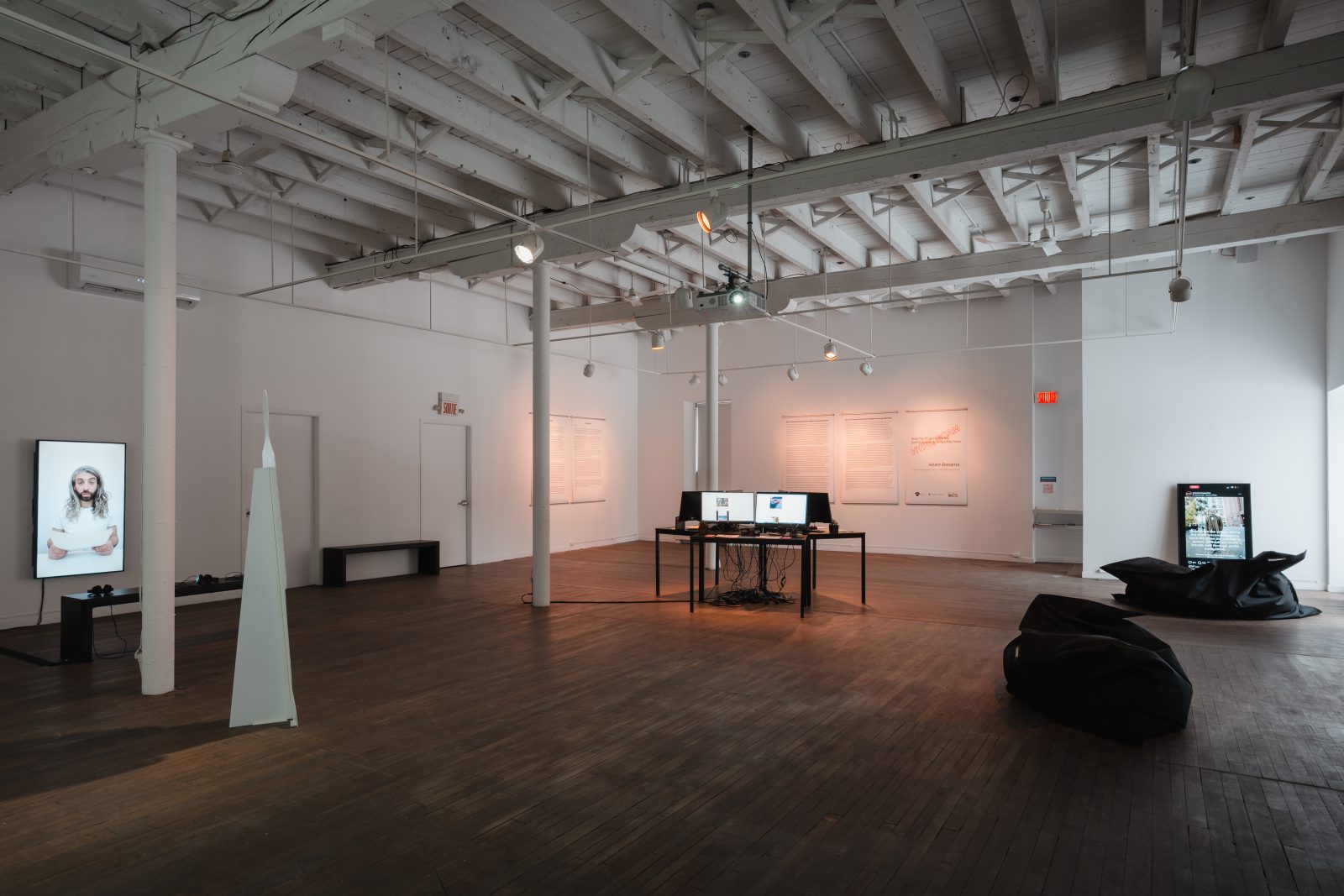
Adam Basanta | How You Produce Eternity, Soft Collisions Amongst Machines
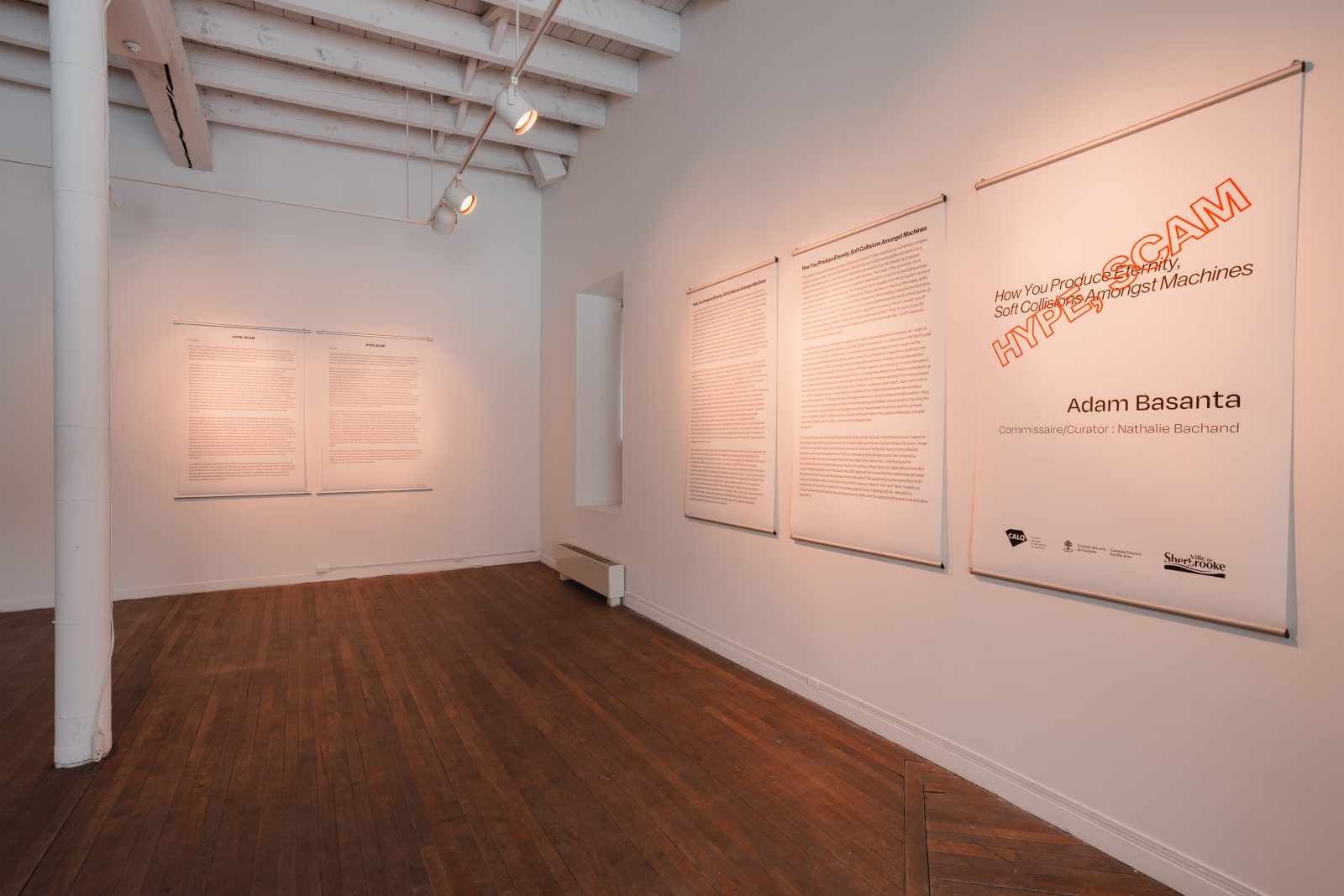
Sporobole presents the premiere of How You Produce Eternity, Soft Collisions Amongst Machines, an exhibition by Adam Basanta created as part of Chantier IA!
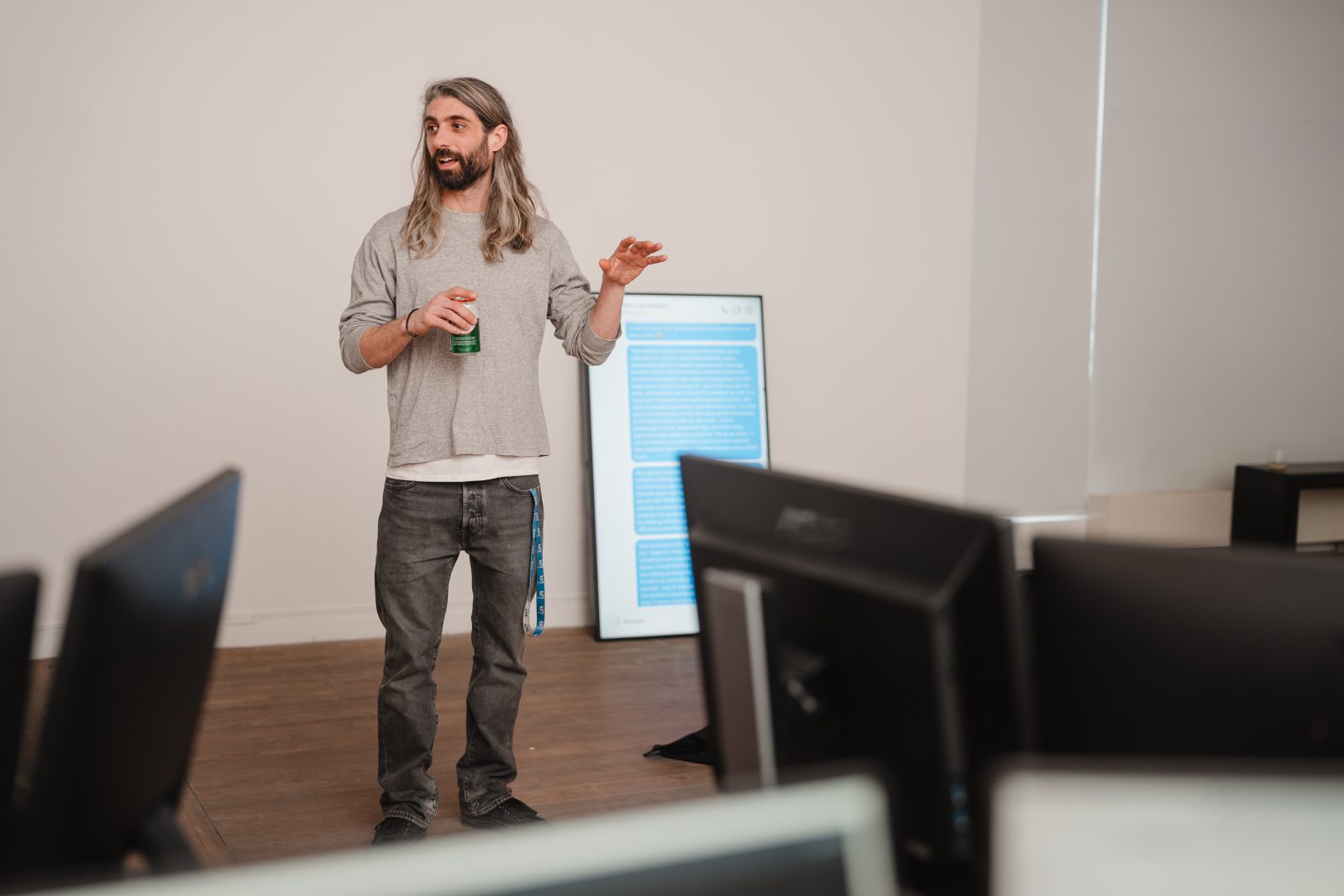
The exhibition will showcase artist’s work inspired by his research and creation residency at the Faculty of Law of the University of Sherbrooke in collaboration with Sporobole.
Introduction by the curator:
The art market system and the parallel cultural economies it fuels constitute an extremely complex network, whose levels of interrelationships often go beyond visible and tangible elements. It is a system where perception and information intertwine, generating a partial, biased, and opaque understanding of its functioning and its multiple mechanisms. The reality of the art world—from creation to dissemination, —not to mention its market, is the result of a chain of connections whose articulation can sometimes be perplexing. The discourse that emanates from the art system is one of speculation, projection, interpretation, and idealization: the production of meaning then easily drifts toward a form of fiction that is regulated by a certain consensus. What reality underpins the branding served up to us by social media? To what extent are our digital identities performed by the process of mediation involved in our screens? What role does the algorithm now play in the art market circuit? What truth does art criticism reflect? What value does a work guarantee? What function does the symbolic value of art serve? Is it a question of using creation to produce eternity—and therefore a value that is almost impossible to set?
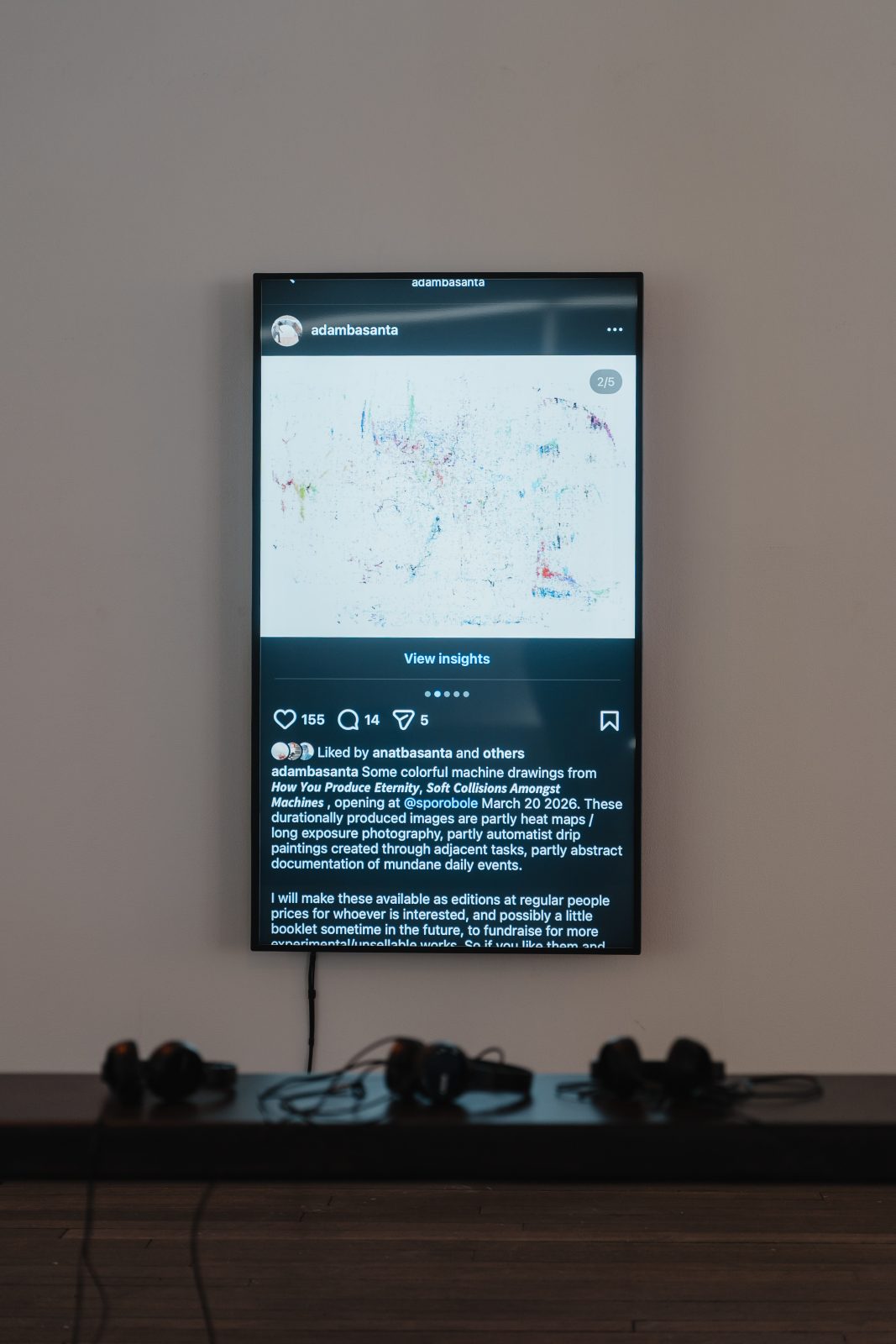
These reflections on the art system emerged in the wake of Adam Basanta’s Interface: art – science Law & AI (artificial intelligence) residency in 2024-2025 at Sporobole, in collaboration with the Faculté de droit at the University of Sherbrooke. This residency provided an opportunity to examine the similarities between these two disciplines, particularly through the lens of algorithms, leading to the creation of diagrams, charts, and trees that articulate different levels of relationships between the legal system and the art system. Simultaneously with this research, another body of work emerged: a series of algorithmic works produced using primitive AI. Using blob detection software connected to a video camera, Basanta’s physical presence generated abstract images resulting from long exposure recordings. Entire days of work captured by this software—gestures, movements, back-and-forth in front of the computer camera—were literally transformed into digital pictorial works as a residual result of the residency. This daily practice of image production—an automated parallel creation—thus became a way of circumventing the limits of time and making it profitable: almost an act of hacking the cultural economy. It is therefore a tactical approach that has allowed the artist to add the symbolic value of another creation to these works. Valued on the art market, this series is inflated by a double speculative bubble, mirroring the volatile and airy masses that compose it.
The systems of art and law share the similarity of operating in a quasi-closed environment, based on their respective internal coherence, which is itself made up of its own laws and flaws. However, these systems are not immutable: how do they move and transform? Is this the result of soft collisions between machines and living entities? Are we witnessing the emergence of a new consensus-economy where humans and algorithms are two sides of the same coin, contributing to the articulation of an intertwined discourse—that of art and law, where flaws can clearly become fruitful and profitable imperfections? Perhaps it would be appropriate to examine the relationship between the construction of value and its subsequent manipulation? By questioning systems and their truth value, we inevitably return to the notion of symbolic value: our idea of “true” and “false” shapes our experience of the world—in addition to now being particularly challenged by AI—and yet it is constantly altered and modified by our perception of reality and the symbolic dimension that activates and feeds it.
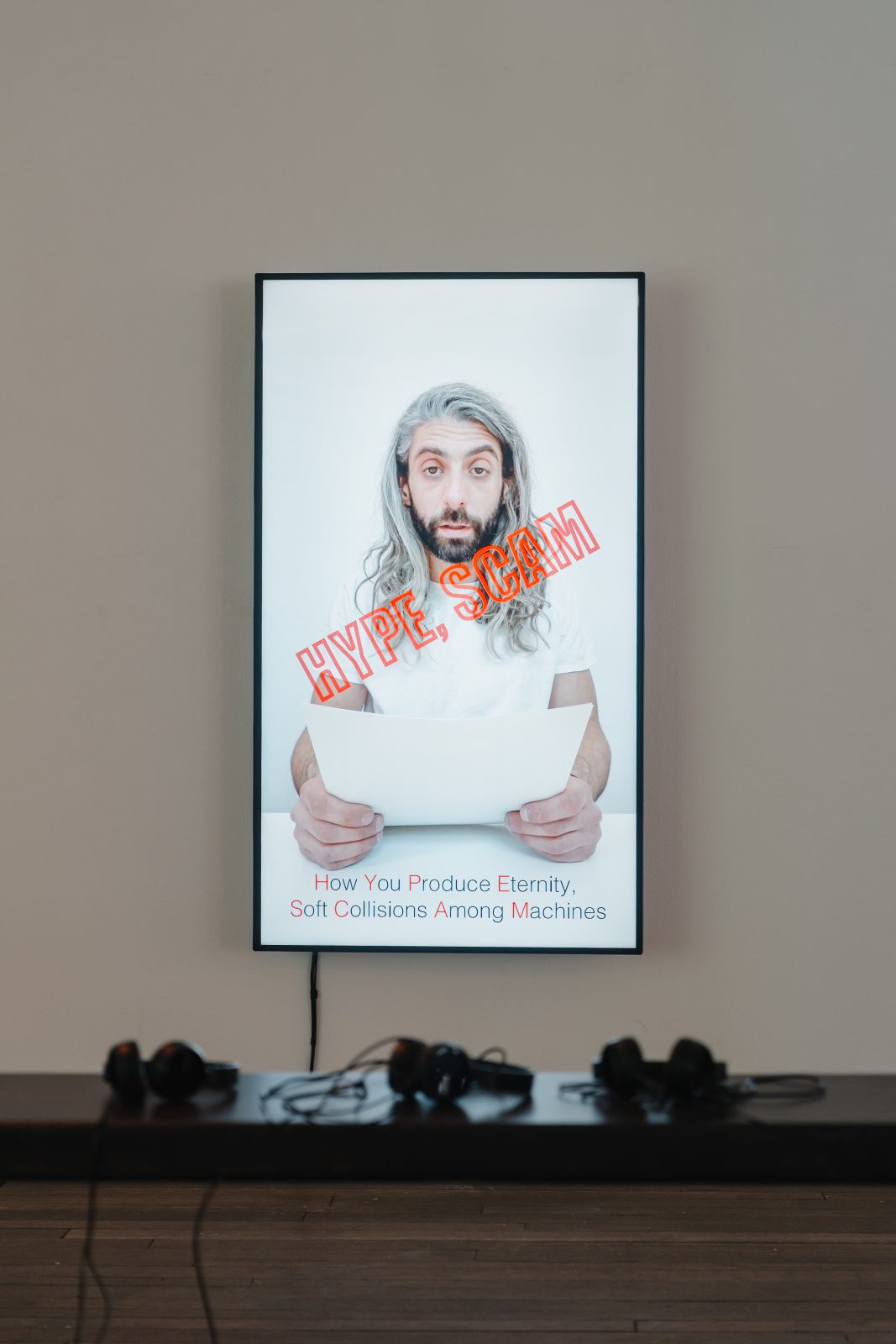
HYPE, SCAM
Epilogue:
“Hype”refers to what is intensively publicized as cutting edge, avant-garde. “Scam”refers to what is fraudulent, deceitful. The art market system is a context where these two qualities can easily intersect and become, together, extremely effective, if not downright prolific. While the way art manages to produce eternity can easily be hype, soft collisions amongst machines are scams here.
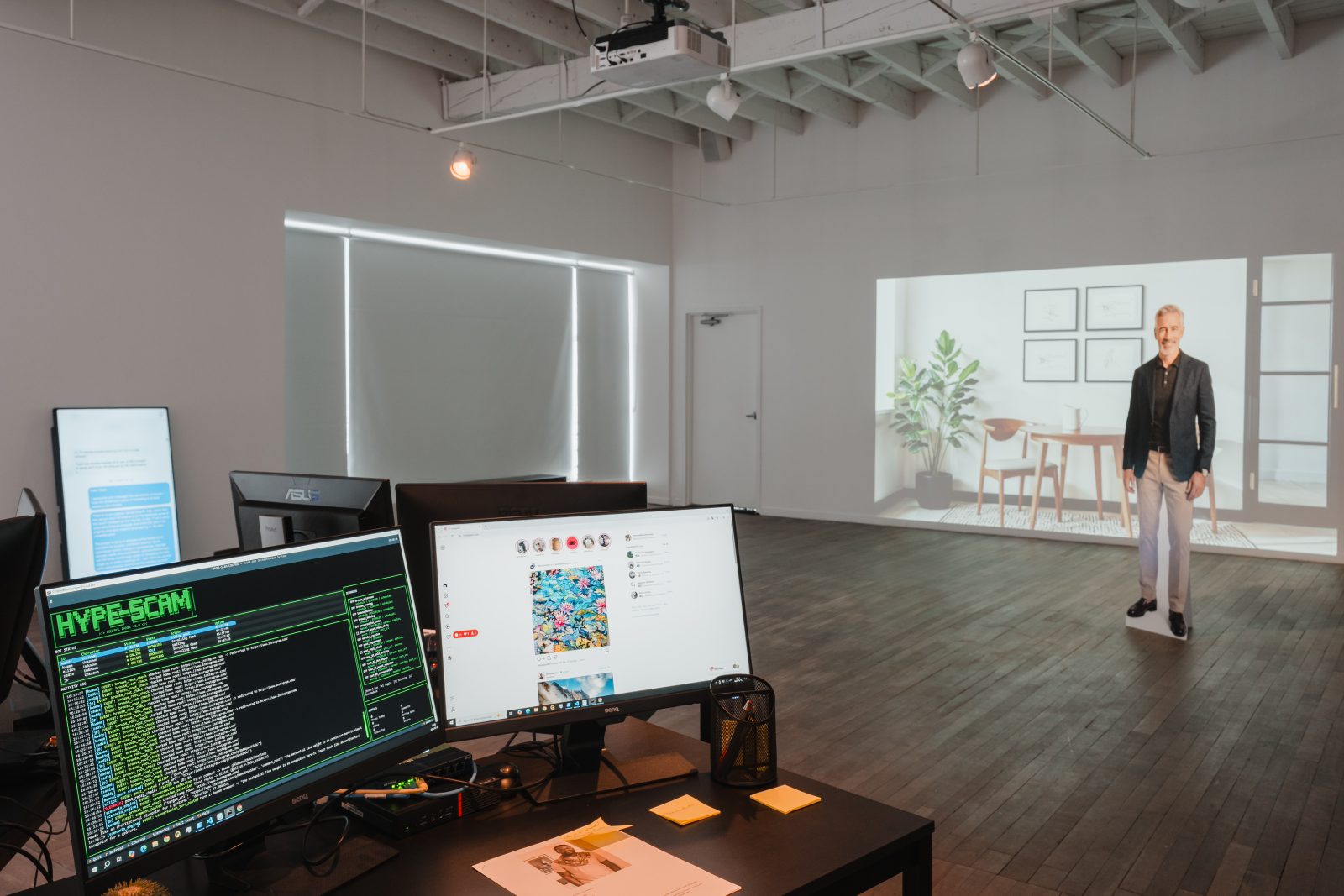
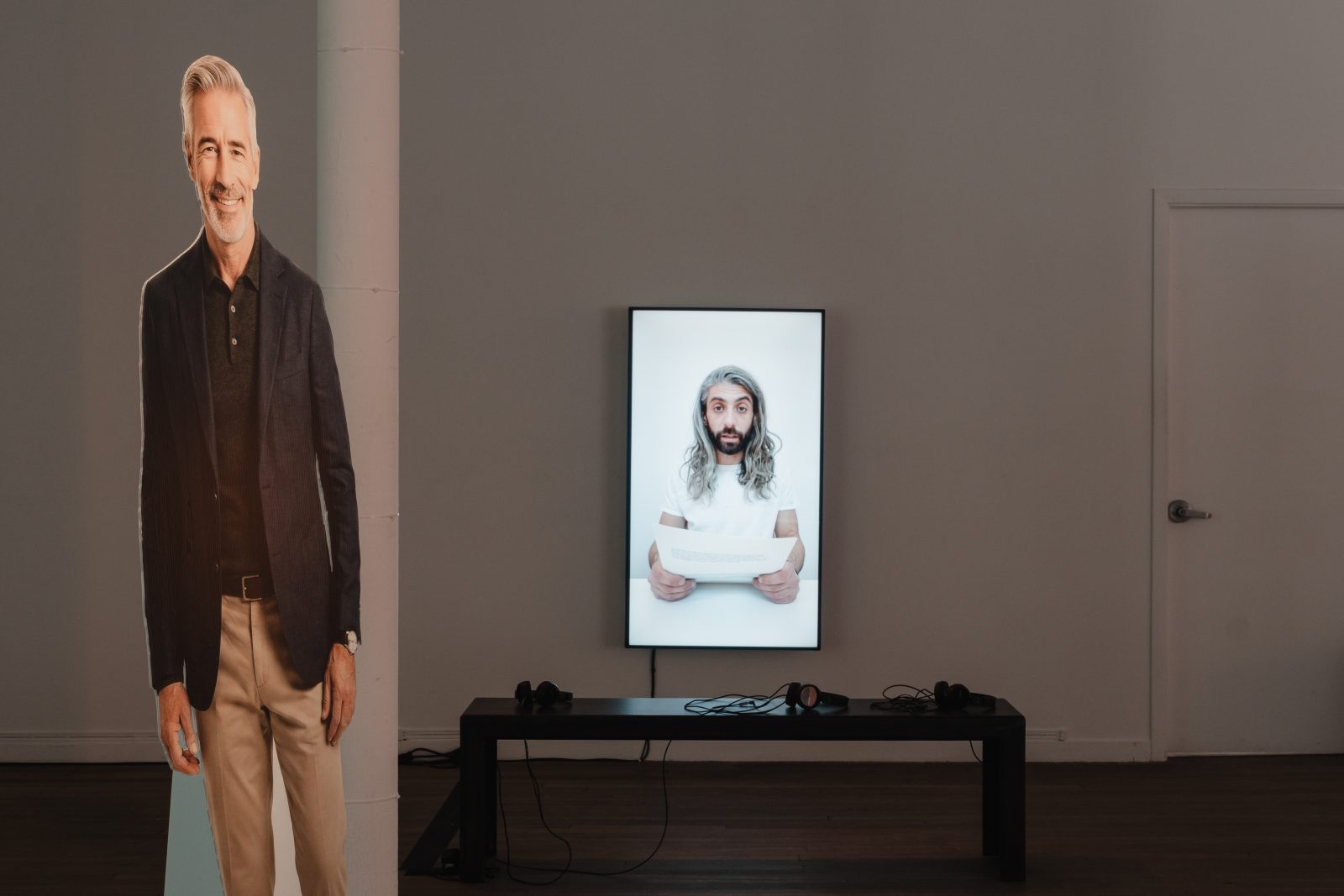
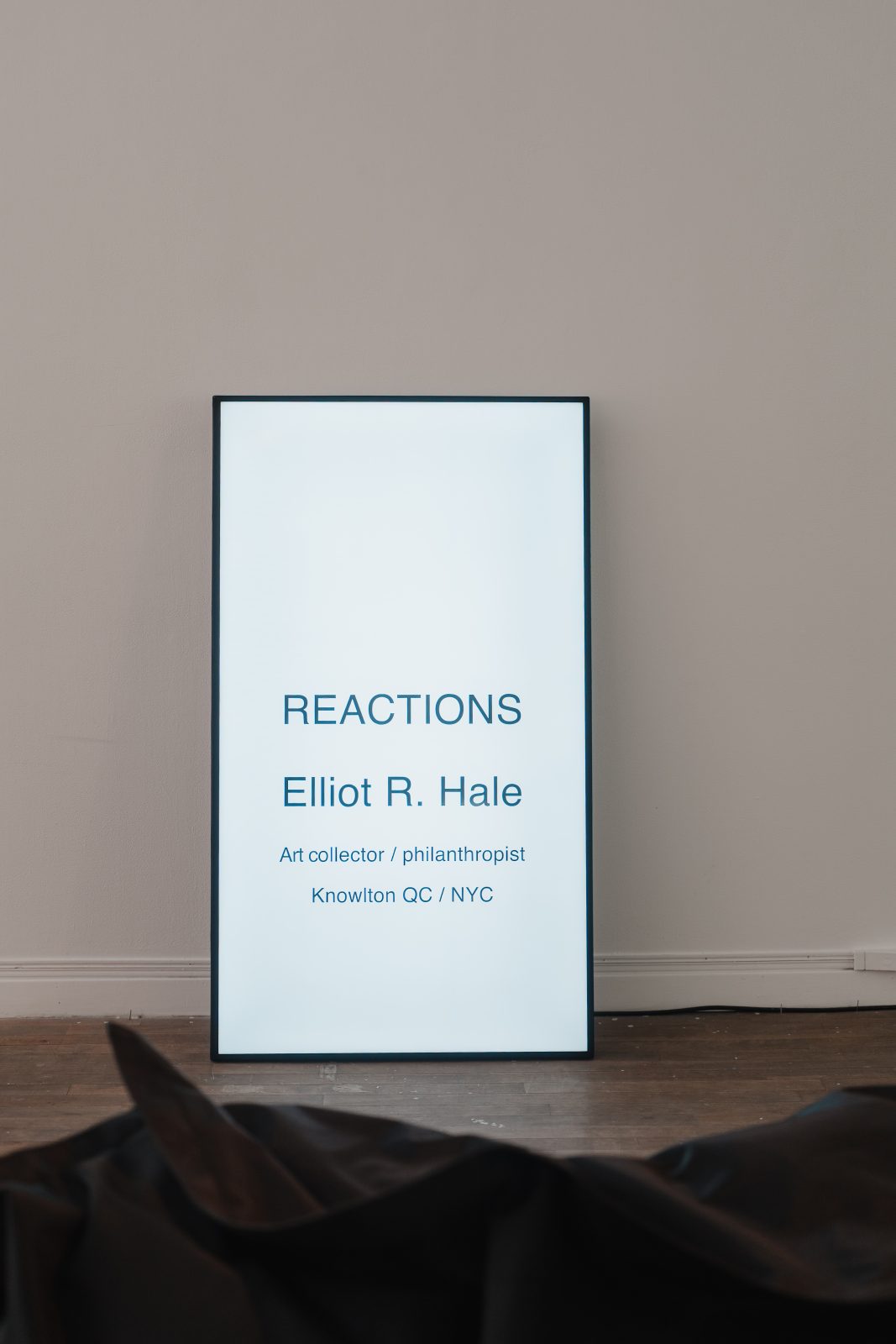
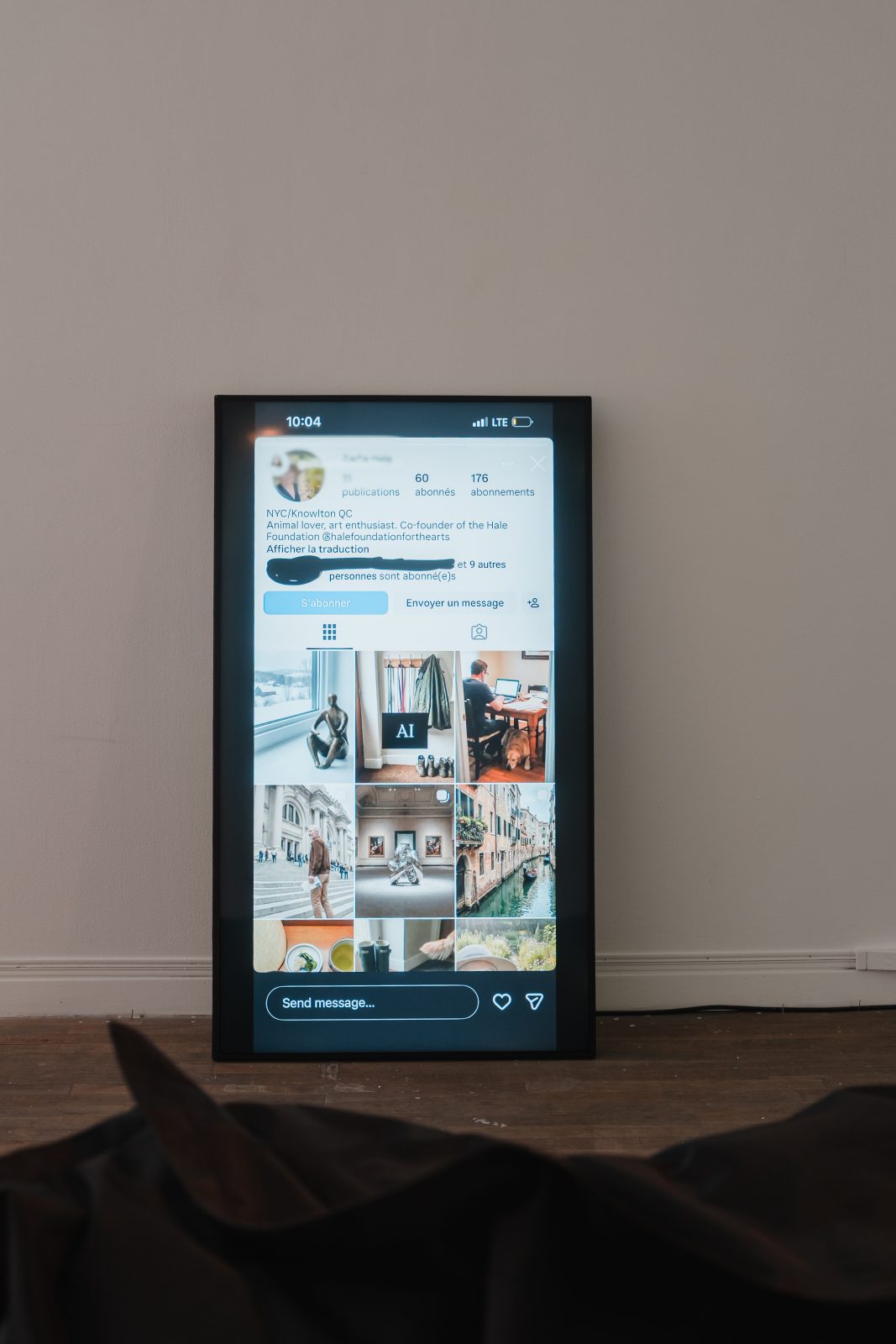
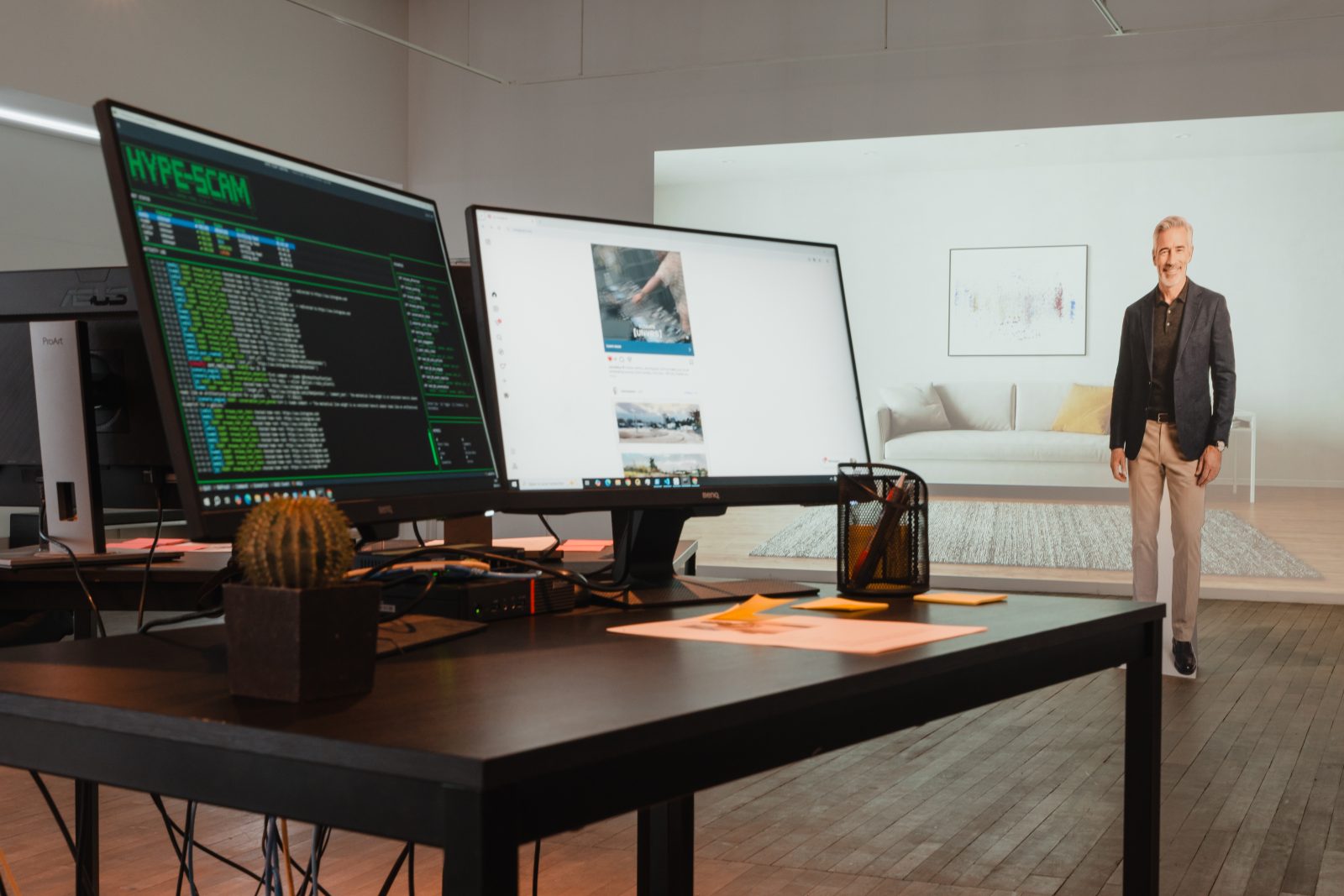
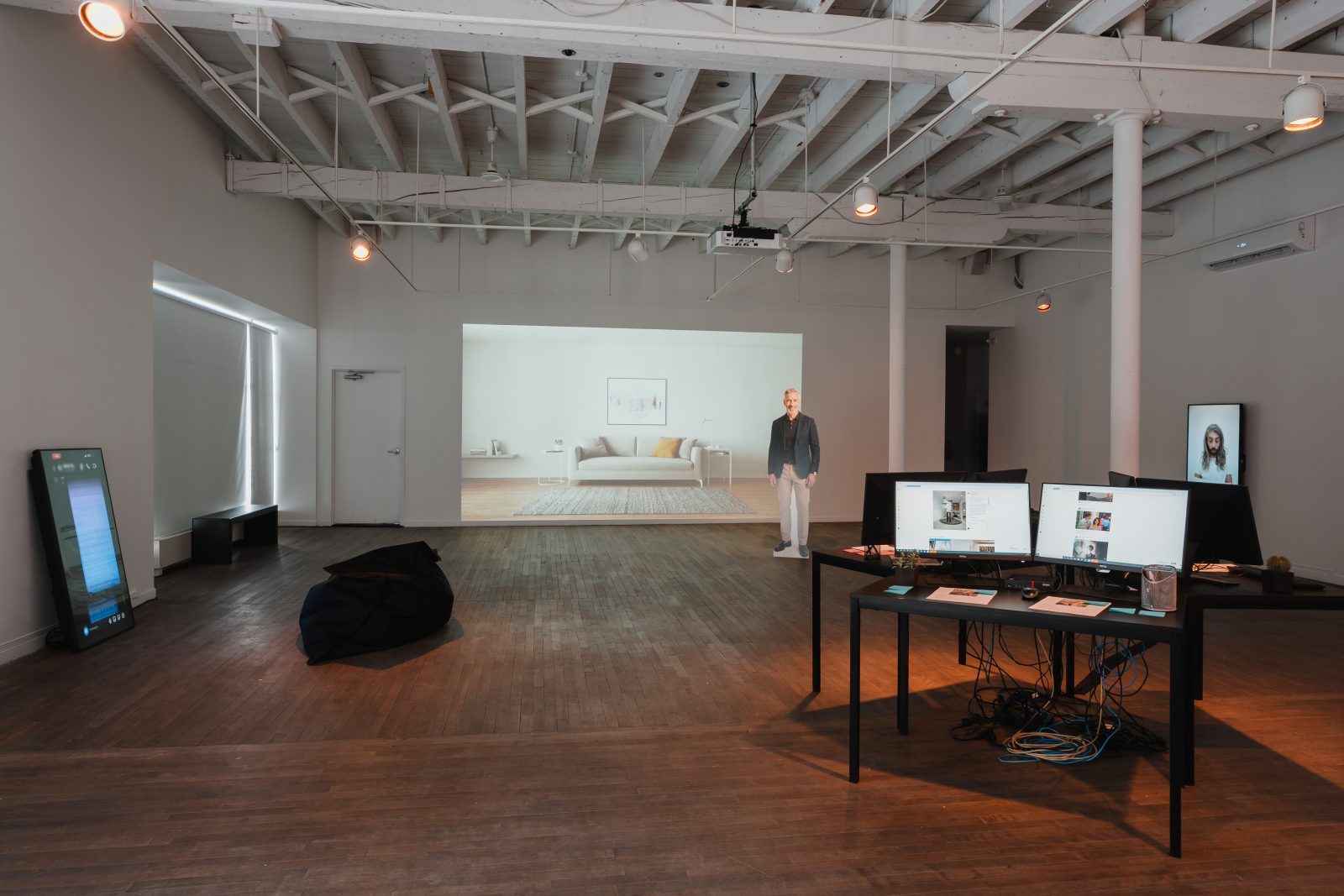
Before taking shape as a physical installation at Sporobole, this project initially took the form of a secret online performance lasting approximately two months, during which a network of fictitious art collectors and curators were deployed on Instagram and integrated with local and international art communities. This experiment is the very foundation ofAdam Basanta’s artistic project, which questions the concepts of truth and falsehood in the context of the art world. If an artificial professional network, consisting of fake social media profiles, fictitious interactions, and fabricated hype, brings greater benefits to an artist’s career than a real network, what value does reality—truth—ultimately hold? Above all, it seems to demonstrate that phenomena such as speculation, misinformation, and appearances will always pay off in a society that considers capital to be a fundamental value. Our era, marked by late capitalism, is a context in which the manipulation ofreality appears to be justified: we are unwittingly evolving into the post-truth era. If the influence of this fake network directly impacts an artistic career, is its artificiality fundamentally less true than reality? The truth is that the fake is an integral part ofreality.And the false, just like the true, becomes part of the fabric ofreality as soon as it is put into action: performed.
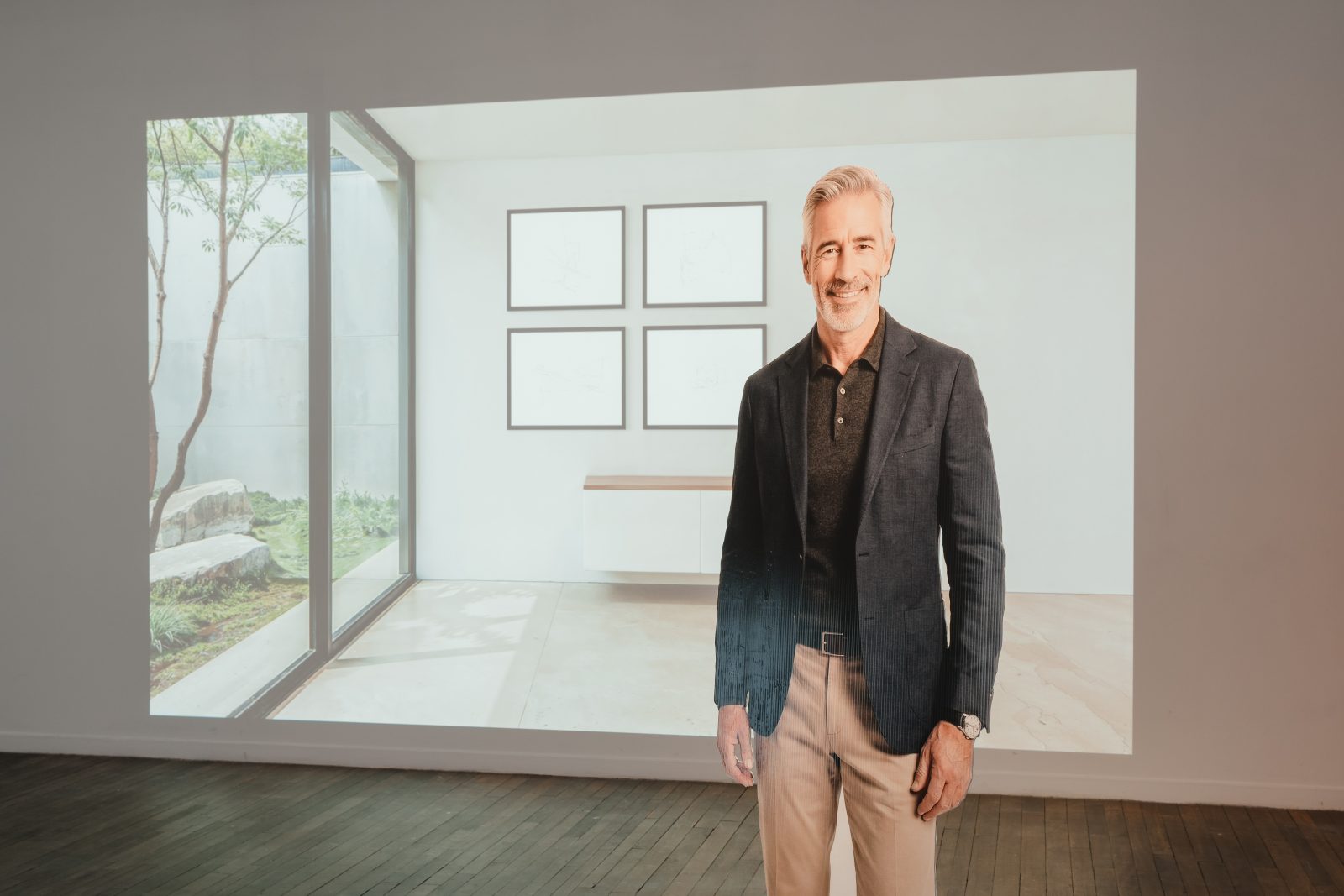
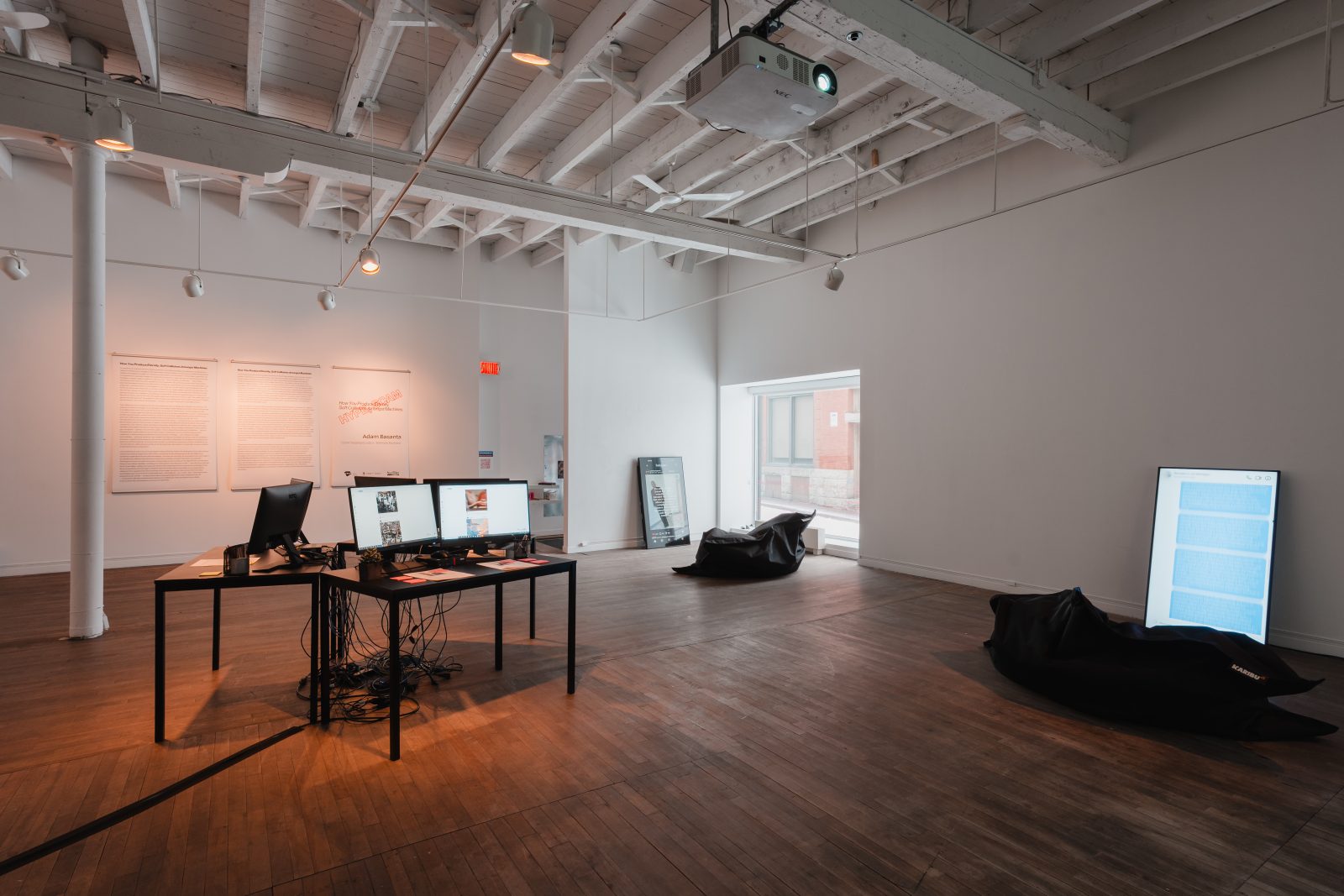
In addition to this central performative aspect, the project also explores the blind spot of hacked automation.Already, the pictorial works created in the context of the “Law &AI”residency are the result of a form of hacking: that of the artist’s time, maximized through a double artistic production; and they are the result of an automated process: that of blob’s detection software. In the context of HYPE, SCAM—the behind-the-scenes of How You Produce Eternity, SoftCollisionsAmongst Machines—these works are also, incidentally, the subject of fictitious acquisitions by fake contemporary art collectors. In the gallery, all of this becomes visible: truth and falsehood coexist, automation is shown for what it is, and hacking is revealed to the visitor. The installation thus functions as the backend of the algorithmic scripting that unfolds on screen: a hacked backend, almost like a hacker’s workshop, whose bot’s farm is behind the scam that unfolds on the surface and manipulates our perceptions. This brings us back to the question: if things are not what they seem, to what extent is the art market really what it claims to be? Isn’t the value of something always just a perceived value, a manufactured value?
The autofictional fraud of HYPE, SCAM, resulting from algorithmically controlled interactions, presents an opportunity to reflect on the blind spots ofAI in terms of law. Given that internet traffic now consists of more than 50% bots, the question of the responsibility of these unintentional agents that haunt our digital worlds is an issue not only from a legal standpoint, but also regarding the erosion of social
cohesion to which this phenomenon contributes.
— Nathalie Bachand.
Photos : Jean-Michel Naud